Source Direct Cooling Copper Y Shaped Tee for HVAC, Plumbing, and Refrigeration
Compare 30 listings for direct cooling copper y shaped tee fittings available from suppliers in China. Buyers can evaluate specifications like pressure ratings, connection types, and certifications to find the right component for HVAC, plumbing, or refrigeration systems.
Key considerations
Products List


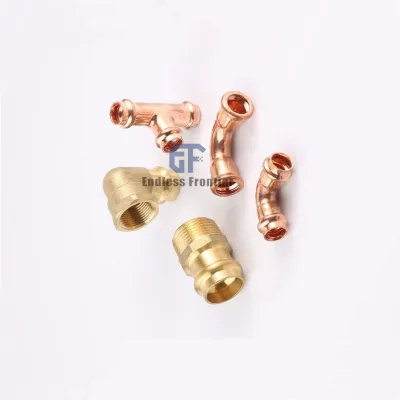


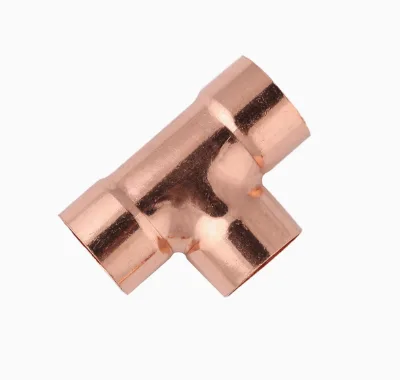


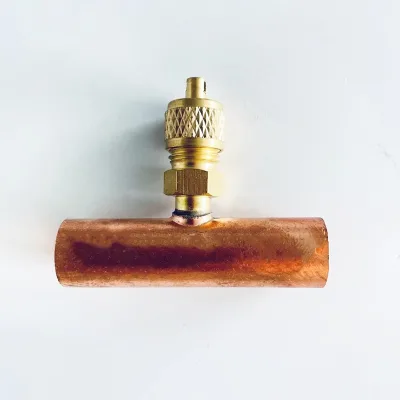
Comprehensive Sourcing Guide
Strategic Sourcing Guide for Direct Cooling Copper Y Shaped Tee Components
Understanding the Technical Architecture of Y Shaped Fittings
The procurement of a direct cooling copper Y shaped tee requires a precise understanding of the component's geometric and functional attributes. In the context of air conditioning accessories, this specific fitting is designed to facilitate fluid distribution or collection within a cooling circuit. The core geometry is defined by a "Y" configuration, which often corresponds to a reducing or equal tee design depending on the specific application requirements. Based on available product data, these fittings are manufactured with a rigid structure, ensuring they maintain their shape under the thermal and pressure stresses typical of cooling systems. The connection method is a critical variable; the market offers both welding and press connection options. Buyers must verify which connection type aligns with their installation infrastructure, as the choice impacts the required tooling and labor expertise on-site.
The material composition is consistently identified as copper, a standard choice for its superior thermal conductivity and corrosion resistance in HVAC applications. The production techniques noted include forging, which generally implies a denser grain structure and higher mechanical strength compared to casting. This is particularly relevant for direct cooling applications where thermal cycling can induce stress. The shape of the fitting is described as "Equal" or "Reducing," with specific models available in various configurations. For instance, the "Lateral" angle is specified as 90° for certain tee variants, while other models may feature a 180-degree angle, indicating a U-bend configuration rather than a traditional Y-shape. Buyers must carefully distinguish between these geometric variations, as a 180-degree bend serves a different hydraulic function than a 90-degree lateral tee. The head code is typically round, and the color is often red, which may serve as a visual identifier for specific pressure ratings or material grades in a supply chain.
Compliance Verification and Certification Standards
When sourcing industrial copper fittings, verifying compliance with international and regional standards is non-negotiable. The supplied product information indicates that manufacturers may hold certifications such as ISO, ASME, ANSI, and GB. These acronyms represent distinct regulatory frameworks: ISO for general quality management, ASME for pressure vessel and piping safety in the United States, ANSI for American National Standards, and GB for Chinese National Standards. It is essential for buyers to confirm that the specific batch of fittings being purchased carries the relevant certification for their target market. For example, a project in the United States will likely require ASME or ANSI compliance, whereas a project in China or one adhering to international trade standards might prioritize GB or ISO certification.
The product standards listed include "custom" and specific dimensional standards ranging from 1/4" to 4". This variability suggests that while standard sizes are available, custom specifications are also a viable option for specialized direct cooling systems. The pressure rating is a critical safety parameter, with some listings indicating a rating of 3000 LBS. However, this figure should be treated as an observation of specific high-performance models rather than a universal attribute for all copper tees. Buyers must request the pressure rating documentation for the exact model number they intend to purchase, as the rating will vary based on the wall thickness, alloy composition, and connection method. Additionally, while background knowledge mentions standards like JIS B2313 or ASTM A182, these should not be asserted as facts for the current product listing without explicit confirmation from the supplier. The procurement strategy must involve a direct request for the mill test reports or certification documents that link the physical product to these specific standards.
Cost Drivers and Pricing Dynamics in the Copper Market
The pricing of copper Y shaped tees is influenced by a complex interplay of raw material costs, manufacturing complexity, and logistical factors. The observed price range in the market spans from $0.10 to $200 USD, a wide spectrum that reflects the diversity of sizes, pressure ratings, and customization levels. A fitting priced at the lower end of this range is likely a standard, small-diameter, off-the-shelf component, whereas a unit at the higher end may be a large-diameter, high-pressure, or custom-forged item. The material cost of copper is volatile and directly impacts the final price; buyers should anticipate that fluctuations in the global copper market will be passed through to the procurement cost.
The Minimum Order Quantity (MOQ) is another significant cost driver. The data indicates an MOQ range of 1 to 5,000 units, with a specific high-confidence fact noting an MOQ of 500 units for certain product lines. Ordering below the standard MOQ often incurs a premium per unit or may not be feasible at all. For buyers requiring small quantities for prototyping or maintenance, the higher unit cost must be factored into the budget. Conversely, large-scale procurement can leverage economies of scale, potentially reducing the unit price significantly. The packaging method, identified as OPP bags and cartons, also contributes to the cost structure. Secure packaging is essential to prevent damage during transit, especially for copper fittings which can be susceptible to scratching or deformation. The production capacity, noted as 1,000,000 units per month, suggests that suppliers have the volume capability to handle large orders, but this capacity must be balanced against the lead time.
Typical Applications in Direct Cooling Systems
The primary application for these copper Y shaped tees is within room air conditioning systems and broader direct cooling circuits. The "Direct Cooling" method implies that the refrigerant flows directly through the copper piping to absorb heat, rather than using an intermediate fluid loop. In this context, the Y shaped tee serves as a junction point where the flow path splits or merges. The "Equal Tee" configuration is typically used when the flow rates and pipe diameters on all three branches are identical, ensuring balanced pressure distribution. The "Reducing Tee," conversely, is utilized when the main line diameter differs from the branch line, allowing for a transition in pipe size without the need for additional adapters.
Specific model numbers such as 01154, 01161, and 01162 correspond to precise dimensional standards, such as 3/4" x 1/2" x 3/4" or 1" x 1" x 1/2". These specific dimensions are critical for retrofitting existing systems or designing new ones where space constraints dictate pipe sizing. The "U BEND" and "T-type tee" models mentioned in the data suggest that the supplier offers a range of fitting types that may be integrated into the same cooling system. The "Application" field is broadly listed, but in practice, these fittings are integral to the evaporator and condenser coils of HVAC units. The "Welding" connection type is particularly suited for permanent installations in commercial buildings where leak-free joints are paramount, while "Press Connection" might be preferred for residential applications where speed of installation is a priority.
Supplier Evaluation and Production Capabilities
Evaluating a supplier for copper fittings requires a multi-faceted approach that goes beyond the basic product listing. The place of origin is identified as Zhejiang, China, a region known for its manufacturing density. The brand name "Endless Frontier" appears in the data, but buyers should not rely on a single brand name as a proxy for quality; instead, they should verify the supplier's track record. The production capacity of 1,000,000 units per month indicates a large-scale operation, which is beneficial for ensuring supply stability during peak demand periods. However, high capacity does not automatically guarantee quality; buyers must assess the supplier's quality control processes.
One of the most valuable attributes listed is the "Video Outgoing Inspection" service. This feature allows buyers to visually verify the condition, dimensions, and finish of the products before they are shipped. This is a significant advantage in remote procurement, as it reduces the risk of receiving substandard goods. The "Leading Time" is stated as 4 weeks, which is a standard timeframe for manufacturing and logistics in this sector. Buyers should confirm if this lead time includes the time for custom tooling or if it applies only to stock items. The "Condition" is listed as "New," which is standard for industrial components, but buyers should ensure that the packaging prevents any damage that could render a "new" product unusable. The payment terms, including FOB, CFR, CIF, and TT, offer flexibility for international trade, allowing buyers to choose the term that best manages their risk and logistics responsibilities.
Quality Control Protocols and Long-Term Procurement Strategy
Ensuring the long-term reliability of direct cooling systems hinges on rigorous quality control. The "Forged" technique mentioned in the specifications is a positive indicator of structural integrity, but it must be verified through documentation. Buyers should request proof of the forging process, such as grain structure analysis or tensile strength reports, to ensure the fittings can withstand the thermal expansion and contraction cycles inherent in cooling systems. The "Warranty" of 1 Year is a standard offering, but buyers should clarify what specific defects are covered. Does the warranty cover material failures, or does it exclude issues arising from improper installation or corrosion due to water quality?
The packaging strategy, utilizing OPP bags and cartons, is a basic but necessary step. For high-value or large-volume orders, buyers might negotiate for enhanced packaging, such as moisture-proof barriers or reinforced corner protectors, to prevent damage during ocean freight. The "Flexible or Rigid" attribute confirms the fittings are rigid, which is expected for copper tees, but buyers should ensure that the rigidity does not make installation difficult in tight spaces. Long-term procurement considerations should include the availability of spare parts and the consistency of the product standard. Since the standard is listed as "custom" for some items and "Standard" for others, buyers must establish a clear specification document that defines the exact standard (e.g., ASME B16.9 or GB/T 12459) to be used for all future orders. This ensures that replacement parts remain compatible with the original system over the lifespan of the equipment.
Summary of Key Procurement Parameters
To facilitate a streamlined sourcing process, buyers should consolidate the critical parameters into a clear checklist. The following table summarizes the key attributes observed in the market for direct cooling copper Y shaped tees, serving as a reference for specification and verification.
| Attribute Category | Observed Values / Options | Verification Requirement |
|---|---|---|
| Material | Copper | Mill Test Report (MTR) required |
| Connection Type | Welding, Press Connection | Confirm compatibility with site tools |
| Shape | Equal Tee, Reducing Tee, 90° Lateral | Verify dimensions against system design |
| Pressure Rating | Up to 3000 LBS (Model Specific) | Request specific rating for model number |
| Certification | ISO, ASME, ANSI, GB | Match to target market regulations |
| MOQ | 1 to 5,000 (Commonly 500) | Negotiate based on order volume |
| Lead Time | 4 Weeks | Confirm inclusion of customs/logistics |
| Origin | Zhejiang, China (Mainland) | Verify supply chain stability |
| Inspection | Video Outgoing Inspection | Request video prior to shipment |
| Packaging | OPP Bag, Carton | Assess need for enhanced protection |
By adhering to these structured guidelines and verifying the specific attributes against the actual product data, buyers can mitigate risks and secure high-quality copper fittings for their direct cooling applications. The focus must remain on the intersection of technical specifications, regulatory compliance, and supplier capability to ensure a successful procurement outcome.
FAQs
What certifications are available for direct cooling copper y shaped tee?
Available certifications include ISO, ASME, ANSI, and GB standards. Buyers must verify which specific certification applies to their target market, as US projects typically require ASME or ANSI compliance while international projects may prioritize GB or ISO.
How is the direct cooling copper y shaped tee connected?
Connection methods include welding and press connection options. The choice impacts required tooling and labor expertise, with welding suited for permanent commercial installations and press connection often preferred for faster residential applications.
Which material is used for the direct cooling copper y shaped tee?
The fittings are manufactured from copper to ensure superior thermal conductivity and corrosion resistance. This material choice is standard for HVAC applications where thermal cycling induces stress and high performance is required.
Can the direct cooling copper y shaped tee be customized?
Customization is available for specific dimensional and standard requirements. While standard sizes range from 1/4 inch to 4 inches, custom specifications can be produced to meet specialized direct cooling system needs.
What is the lead time for direct cooling copper y shaped tee orders?
The standard lead time is four weeks for manufacturing and logistics. This duration applies to production cycles and should be confirmed for custom orders which may require additional tooling time.
What is the minimum order quantity for direct cooling copper y shaped tee?
The minimum order quantity ranges from one to five thousand units, with a specific baseline of 500 units for certain product lines. Ordering below standard MOQs may incur higher per-unit costs or be unfeasible.